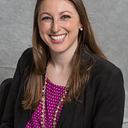










Krystal Mason - Virtual Mentor Panel
1. What was your first leadership role and how did you obtain it?
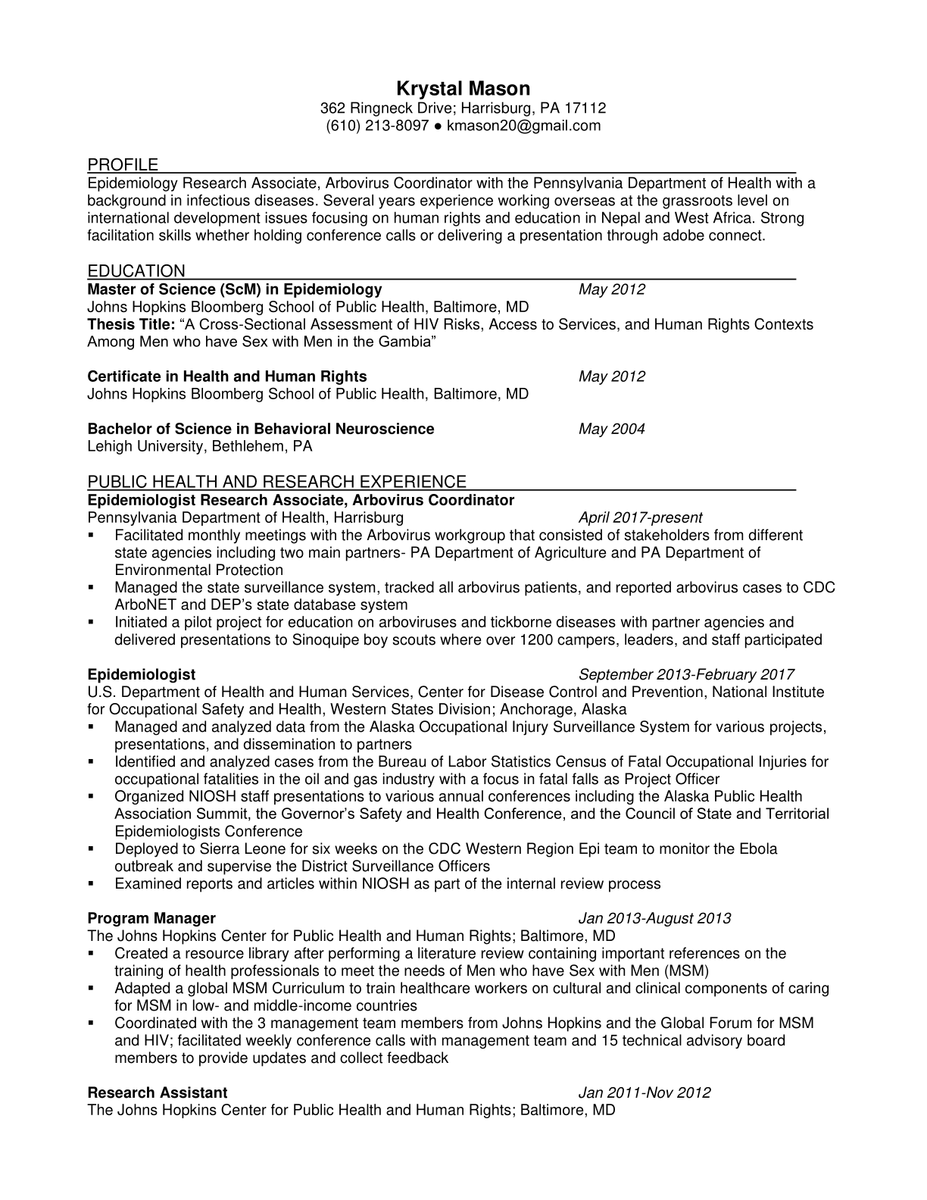
I took on the role of Project Committee Coordinator for an international non-government organization, Peace Brigades International. This is a human rights organization that I worked for first as a volunteer field officer and then for a few years in support positions. The organization sends volunteers into conflict areas and uses third party non-violent techniques to keep partners safe while they are working toward transitional justice. Even while I started my Epi career, I continued my work for this organization and learned many valuable skills, especially coordinating/facilitating meetings with internationals around the world. Don’t underestimate the skills you learn from volunteering, internships, and the like, even if it might not be directly related to your job/career. I’m now the Arbovirus Coordinator for the PA Dept of Health and I spend time collaborating with other state agencies to facilitate meetings and projects.
I took on the role of Project Committee Coordinator for an international non-government organization, Peace Brigades International. This is a human rights organization that I worked for first as a volunteer field officer and then for a few years in support positions. The organization sends volunteers into conflict areas and uses third party non-violent techniques to keep partners safe while they are working toward transitional justice. Even while I started my Epi career, I continued my work for this organization and learned many valuable skills, especially coordinating/facilitating meetings with internationals around the world. Don’t underestimate the skills you learn from volunteering, internships, and the like, even if it might not be directly related to your job/career. I’m now the Arbovirus Coordinator for the PA Dept of Health and I spend time collaborating with other state agencies to facilitate meetings and projects.
2. How do you learn new skills on the job?
I’ve used a combination of self-training, ie taking online SAS classes, and asking colleagues with more experience and skills when I’m stuck on something. For my most recent job with PA Dept of Health, I was really fortunate to have some overlap with a colleague who was phasing out of the job and had set up many of the protocols and processes. I have several colleagues now that I can go to for help with data systems, help with code, help with admin processes, etc. Sometimes just knowing who to ask at the beginning can take some time and effort, then it gets easier.
I’ve used a combination of self-training, ie taking online SAS classes, and asking colleagues with more experience and skills when I’m stuck on something. For my most recent job with PA Dept of Health, I was really fortunate to have some overlap with a colleague who was phasing out of the job and had set up many of the protocols and processes. I have several colleagues now that I can go to for help with data systems, help with code, help with admin processes, etc. Sometimes just knowing who to ask at the beginning can take some time and effort, then it gets easier.
3. What are the day-to-day work and responsibilities like in your current position?
My main job is surveillance of arboviruses in Pennsylvania (mosquito and tick diseases), making sure we investigate the cases and get all of the information we need to report to the CDC surveillance system. I also provide reports analyzing trends, answer media inquiries, keep track of outbreaks, coordinate with Dept of Environmental Protection for vector control efforts, provide weekly updates, facilitate monthly calls for the arboviral workgroup, help coordinate education and outreach activities, and other epi tasks as needed throughout the year.
My main job is surveillance of arboviruses in Pennsylvania (mosquito and tick diseases), making sure we investigate the cases and get all of the information we need to report to the CDC surveillance system. I also provide reports analyzing trends, answer media inquiries, keep track of outbreaks, coordinate with Dept of Environmental Protection for vector control efforts, provide weekly updates, facilitate monthly calls for the arboviral workgroup, help coordinate education and outreach activities, and other epi tasks as needed throughout the year.
4. What skills do you think new members of the public health workforce need to be building?
There are the ‘hard skills’ that are valuable such as epi basics and being able to analyze data that you can learn from the classroom. I would also emphasize the importance of ‘soft skills’ such as facilitating meetings, coordinating projects, collaborating with other stakeholders which are usually learned more from experience and jumping into projects. Learning more about ‘needs assessments’ so that projects really are for the benefit of the community and even led by community members always seem to have the biggest impact. Also, learning more about different approaches, ie ‘do no harm’ and really evaluating the work you are doing and who it is benefitting. All of these skills are incredibly important no matter where you end up working.
There are the ‘hard skills’ that are valuable such as epi basics and being able to analyze data that you can learn from the classroom. I would also emphasize the importance of ‘soft skills’ such as facilitating meetings, coordinating projects, collaborating with other stakeholders which are usually learned more from experience and jumping into projects. Learning more about ‘needs assessments’ so that projects really are for the benefit of the community and even led by community members always seem to have the biggest impact. Also, learning more about different approaches, ie ‘do no harm’ and really evaluating the work you are doing and who it is benefitting. All of these skills are incredibly important no matter where you end up working.
5. Where do you see public health going in the future as a field?
I’m hopeful the windful of resources now coming in will be used to strengthen state, national, and global public health infrastructure. Historically, these efforts are usually short-lived and those allocating resources quickly forget the importance of just basic surveillance of infectious diseases. Then funding dries up, another major outbreak occurs, and we’re caught unprepared. I’m hoping after covid-19, this doesn’t happen any more and we continue funding public health infrastructure the way we are right now.
I’m hopeful the windful of resources now coming in will be used to strengthen state, national, and global public health infrastructure. Historically, these efforts are usually short-lived and those allocating resources quickly forget the importance of just basic surveillance of infectious diseases. Then funding dries up, another major outbreak occurs, and we’re caught unprepared. I’m hoping after covid-19, this doesn’t happen any more and we continue funding public health infrastructure the way we are right now.
6. What gaps in the field of public health do you think need to be filled?
Global response took a major hit during the Trump administration, it would be great to restore all of the CDC international posts and give them the resources they need to build up their response efforts. I would also like to see more advocacy and lobbying efforts at the national and state level. Maybe more professionals that have backgrounds in law as well as public health could really help sway political decisions in our favor.
Global response took a major hit during the Trump administration, it would be great to restore all of the CDC international posts and give them the resources they need to build up their response efforts. I would also like to see more advocacy and lobbying efforts at the national and state level. Maybe more professionals that have backgrounds in law as well as public health could really help sway political decisions in our favor.
7. What advice do you have for early career professionals in public health?
Sometimes it can be stressful and frustrating getting that first job after school. If you’re not quite finding a good match with your skills, I would advise to open a wider net in terms of geographic location and topic area. Also, try not to let amazing opportunities pass you by and continue choosing paths that open doors and interest you. Take advantage of any and all trainings that are covered by HR and your employer. Finally, if you end up in a position that’s not quite what you expected and you’re feeling stuck, don’t be afraid to reach out to supervisors and colleagues. Often there are opportunities to work on different projects, different teams, different topic areas, etc.
Sometimes it can be stressful and frustrating getting that first job after school. If you’re not quite finding a good match with your skills, I would advise to open a wider net in terms of geographic location and topic area. Also, try not to let amazing opportunities pass you by and continue choosing paths that open doors and interest you. Take advantage of any and all trainings that are covered by HR and your employer. Finally, if you end up in a position that’s not quite what you expected and you’re feeling stuck, don’t be afraid to reach out to supervisors and colleagues. Often there are opportunities to work on different projects, different teams, different topic areas, etc.
 👍
👍