













Using data systems to identify vaccine breakthrough infection
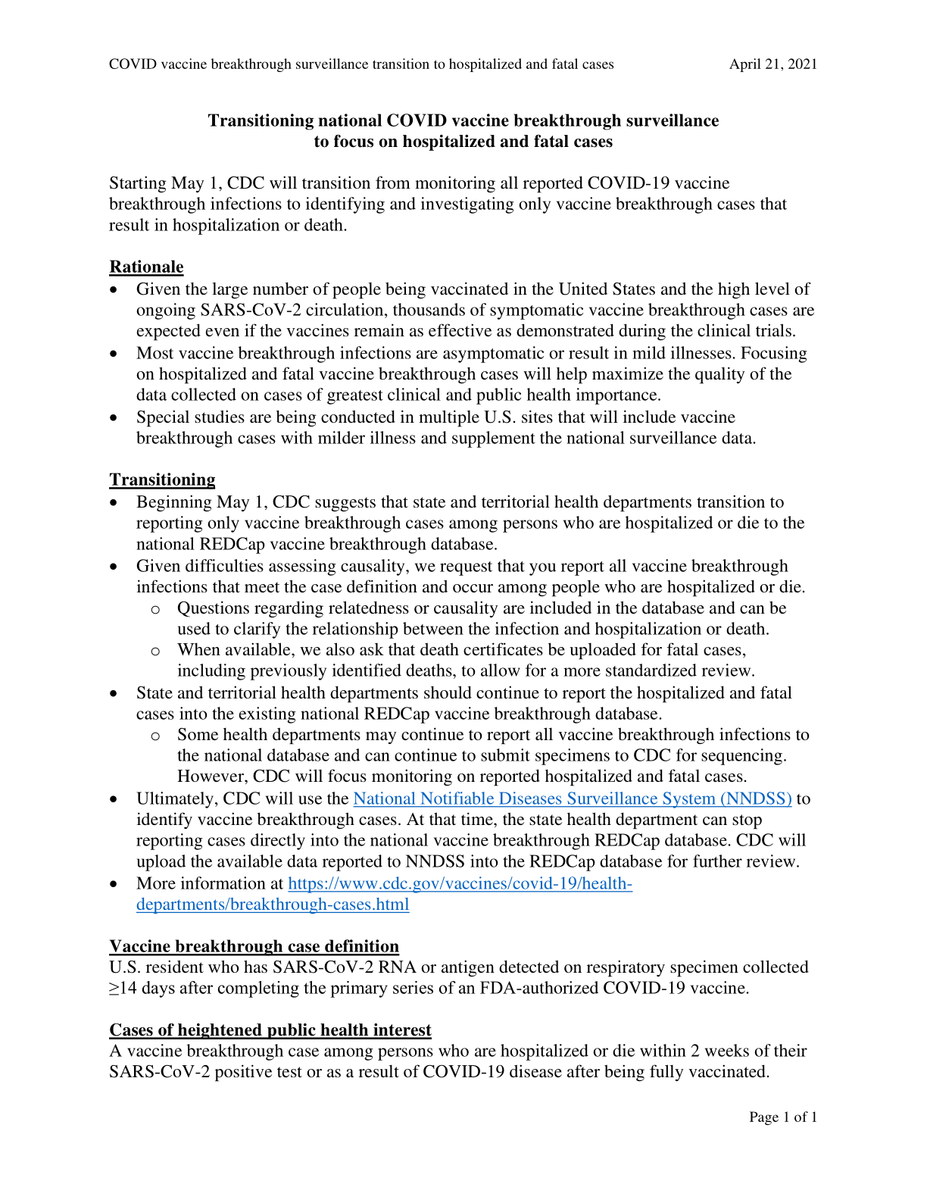
Last week, CDC announced the transition from monitoring all reported COVID-19 vaccine breakthrough cases to instead focusing on identifying and investigating only those resulting in hospitalization and death, effective May 1. The PDF announcement is attached below.
How are PHAs using their data systems to identify vaccine breakthrough infections meeting these criteria?
Also, have you received any questions from labs asking how to report positive results in vaccinated individuals? This question came up on last week's APHL open ELR call, and the consensus seemed to be that PHAs would prefer to match positive lab results with vaccination data, rather than have some kind of indication of vaccination status on the incoming ELR. However, it looks like LOINC just created a new code for sending immunization status with a positive lab result, so that preference may vary. It would be interesting to hear what types of questions you've received from labs about sending vaccination status, and how you have responded.
We would like to discuss the these topics (and more) on this Friday's workgroup call. Feel free to provide comments here, or bring them to the call for discussion.
How are PHAs using their data systems to identify vaccine breakthrough infections meeting these criteria?
Also, have you received any questions from labs asking how to report positive results in vaccinated individuals? This question came up on last week's APHL open ELR call, and the consensus seemed to be that PHAs would prefer to match positive lab results with vaccination data, rather than have some kind of indication of vaccination status on the incoming ELR. However, it looks like LOINC just created a new code for sending immunization status with a positive lab result, so that preference may vary. It would be interesting to hear what types of questions you've received from labs about sending vaccination status, and how you have responded.
We would like to discuss the these topics (and more) on this Friday's workgroup call. Feel free to provide comments here, or bring them to the call for discussion.
So I don't forget. Here's a summary of our break through hunting in Michigan.
Process:
* Michigan part of CDC's nationwide investigation (COVID-19 Breakthrough Case Investigations and Reporting | CDC<https://www.cdc.gov/vaccines/covid-19/health-departments/breakthrough-cases.html)>
* Weekly match COVID-19 cases to records of all fully vaccinated persons
* Absence of a positive test less than 45 days prior to the post-vaccination positive test
* Send data to CDC and, if available, gather respiratory specimens for whole genome sequencing
* Michigan Data (1/1/21 through 4/20/21):
* 2,108 cases met criteria based on a positive test 14 or more days after being fully vaccinated
* Less than 1% of people who were fully vaccinated met this case definition
* Includes 22 deaths, 21 persons 65 years or older, one had prior PCR positive greater than 45 days prior
* 41 cases were hospitalized
* Summary Points:
* Number of potential cases identified to date is not in excess of what might be expected with vaccines with 95% efficacy.
* Proportions of those symptomatic, hospitalized, and who died are all lower than those who are unvaccinated.
* Continue to encourage precautions while out in public, including wearing masks, washing hands and social distancing, even after receiving the vaccine until more Michiganders have been able to be vaccinated.
* 197 cases met criteria based on a positive test 14 or more days after being fully vaccinated
* Less than 0.5% of people who were fully vaccinated met this case definition
* Includes 1 death
* 34% 65+; 33% 40-64; 33% >40
* 18 HH exposure; 42 congregate living exposure; 20 exposure to known case; 6 workplace exposure; 2 social gathering exposure
* 23 (12%) had immunocompromising condition
* 37.3 days = mean time between qualifying dose and positive test
* 0 with documented previous COVID-19 dx
* 43% asymptomatic; 25% mild symptoms (allergy-like); 29% moderate symptoms (flu-like); 3% severe (hospitalized/dead)
* 7/15 (47%) specimens successfully sequenced were a VOC/VOI
* 20/35 (57%) of specimens submitted couldn’t be sequenced
Registration link: https://naccho.zoom.us/webinar/register/WN_4h0UHS1fSNybES75WMCPkA